

Why leave nothing behind?
Stents have transformed PCI.
Modern drug-eluting stents are effective, durable and associated with excellent outcomes. But they still leave something behind. And for some patients, that matters.
This is why interest in drug-coated balloons (DCBs) continues to grow.
Sandeep describes the central rationale clearly, "…we all know that stents these days are excellent in terms of the durability and the low clinical events but ultimately you're leaving something behind."
Adam frames DCB as an additional option rather than a wholesale replacement for stents, "The use of a drug-coated balloon is an excellent tool that we can add to our PCI toolkit."
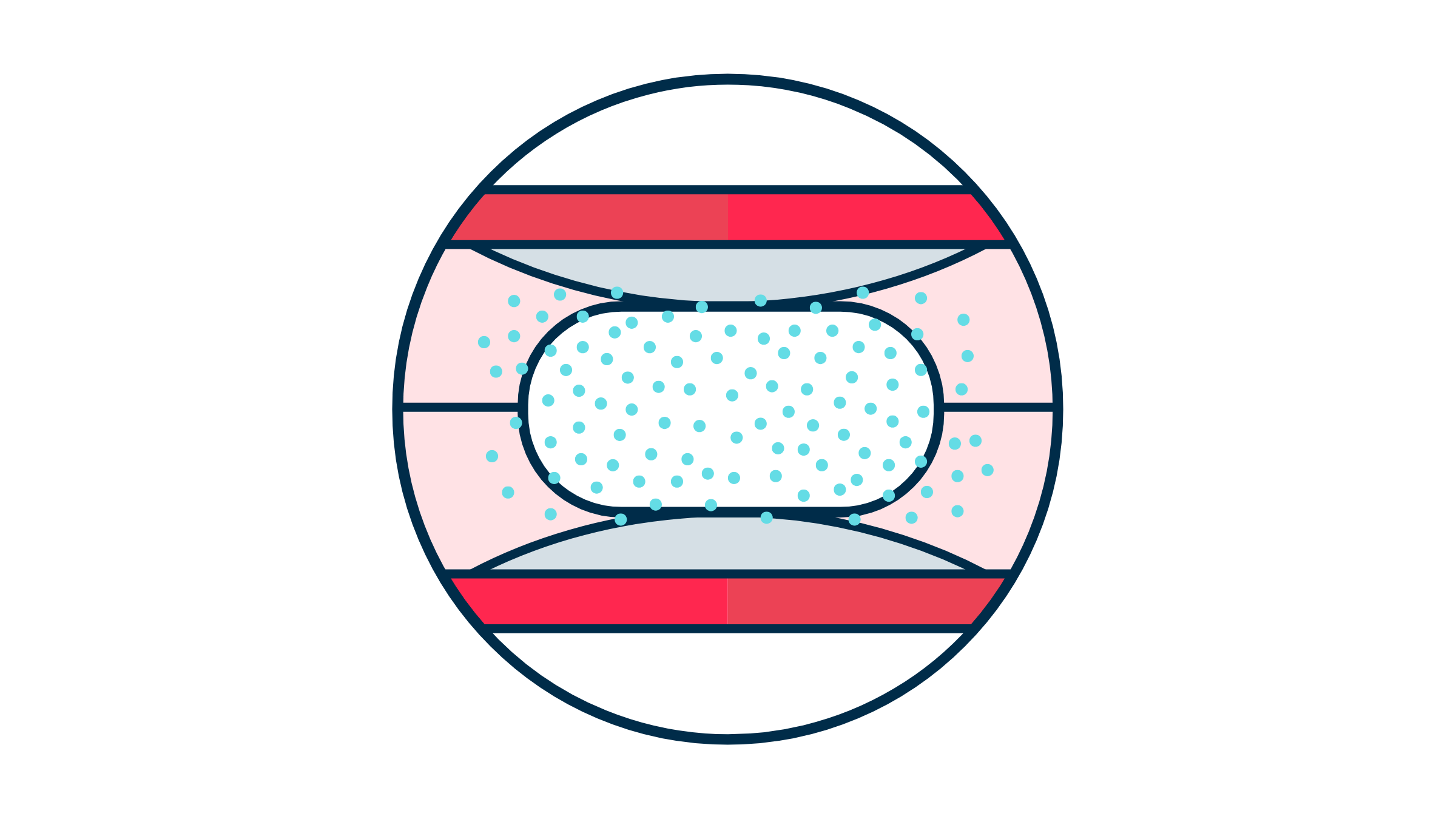
The idea behind DCB is simple: treat the lesion, deliver the drug, and avoid leaving a permanent implant. But the decision to use DCB is not about replacing every stent. It is about understanding where a “leave-nothing-behind strategy” may make the most sense.
Where DCBs may make sense
For both Sandeep and Adam, the strongest use cases are consistent: in-stent restenosis, small vessels and bifurcations, with careful attention to bleeding risk and antiplatelet requirements.
Adam points to previously stented lesions as an excellent use case, "In lesions that have previously been stented and there's in-stent restenosis and/or a complication with the stent, inserting a second stent or even a third stent can compound the problem."
He then highlights small vessels, "Alternatively, in small vessels, a drug-coated balloon can also be useful."
Sandeep makes a similar point in relation to lesion subsets where leaving metal behind may be less attractive, "As of now, the evidence lies in small vessels, long lesions, bifurcations, and patients who can't take a dual anti-platelet therapy beyond a month."
The decision comes after preparation
But the message from both conversations is not that DCB should be used indiscriminately.
The key decision is made after lesion preparation.
Sandeep states it clearly, "So look, this is a very important question you asked me, because the decision to use DCB is made after the lesion preparation."
Adam says the same principle guides his decision-making, "We know when deciding to treat a vessel with a drug coated balloon, lesion preparation is extremely important."
You may begin thinking a lesion is suitable for a DCB, but if preparation is suboptimal, or if there is significant recoil, or flow is compromised, then a stent may still be the right answer.
For Adam, the practical threshold is clear, "If the vessel can be well prepared and it does not recoil more than 30% or there is not a flow limiting dissection or what we would classify as a type C dissection or greater." In that situation, he says, "then a scaffold does not really need to be left behind."
When a stent is still needed
Conversely, when the lesion cannot be adequately prepared, the case changes. "However, if there's a significant dissection that requires scaffolding, a stent is needed, or if there's significant recoil and a residual stenosis of more than 30%, we know that a scaffold is also required."
In other words, DCB is not a shortcut.
It requires careful patient selection, meticulous lesion preparation and the confidence to adapt your strategy when the vessel tells you otherwise.
Thinking beyond the immediate result
There are also patients where long-term thinking becomes particularly important.
A younger patient may live with the consequences of a stent for decades. An older patient may have a bleeding risk or need surgery that makes shorter antiplatelet therapy desirable. In both cases, DCB may offer an alternative worth considering.
Where DES remains central
At the same time, drug-eluting stents remain essential. Adam is explicit about this, "For any vessel that's over three millimeters in diameter a drug- eluting stent is still the standard of care."
For large proximal disease, his first-line approach remains stenting, "So if I'm treating a patient in a large vessel, a proximal lesion, whether it's a proximal LAD or a left main, a drug eluting stent will still be my first option if the lesion has not been stented previously."
A growing role, not a blanket replacement
The field is still evolving, and important questions remain. Evidence continues to grow, particularly in larger vessels and more complex lesions.
But for both Sandeep and Adam, the direction of travel is clear.
Sandeep says, "I feel this is going to grow, and there'll be more and more DCBs used over time across the globe."
Adam reaches a similar conclusion, "I think as cardiology progresses, there'll be greater reliance on drug coated balloons and a lower number of stents being implanted."
That growth will not come from using DCB in every case. It will come from understanding where DCBs add value, understanding their limitations, and developing the skills to optimise use.
Because ultimately, successful DCB treatment is not defined solely by the device.
It is defined by thoughtful patient selection, meticulous lesion preparation and the confidence to choose the right strategy for the patient in front of you.
Or, as Sandeep puts it, "DCBs can be used in most lesions, but lesion preparation is the key."
