

Becoming Series: Laura Novelli - Headphones On
Curious about everything around here, as a teenager Laura struggled to find her path. Headphones on, she dove into every subject as if her life depended on understanding it. But, having found her way to medicine, and as a male dominated field, Interventional Cardiology, quickly becomes an aspiration, an unexpected lecture suddenly provides a clear direction.
Words by Laura Novelli
Laura smiles. Sat under a soft yellow light, with a white wall as a backdrop, she is not what you would typically expect of a complex PCI operator.
“I was born in Rome and when I was a child my mother was really worried about me. Apparently, all I did was stare and observe and it was taking me a really long time to learn how to speak,” says Laura.
"I was interested in everything and as I progressed through high school things got even more unclear. I was considering studying biology, then medicine, then physiotherapy and later mechanical engineering. I had a lot of interests.
“But of course, to get into any of these fields you have to do university access tests. So, I did, for all of them.
“In the end, I went into medicine. During my training, I considered specialising in cardiology, but at my university, you had to spend at least 2 of your 6 years focused on it. I was so curious about so many other things that I didn’t commit. That led to a lot of different rotations from the psychiatry unit to infectious diseases.
“When I look back, I get the impression that the initial part of my life was completely defined by my curiosity.”
A change of city
“Step by step a path started to emerge though. I moved to Milan for my residency and I’m not going to lie; it was quite tough. I remember arriving in Milan with all my luggage. It was a foggy day. And I spent hours walking around trying to find my apartment.”
“The hospital was quite far from where I lived. Every morning I’d put my headphones on, jump on the bus and listen to music or a medical podcast all the way to the hospital.
“Because I hadn’t been in a cardiology ward before starting my residency I really had to catch up. I was the outsider. Everyone else had been doing it for quite a while.
“I spent my first three months of residency in the Heart Failure group. I was very happy there. All the people were really smart and passionate and I was considering focusing on it.

“Then I moved on to a rotation that dealt with cath lab administration. At the very end, I heard that one of the physicians was doing a lecture about coronary guide wires and a friend of mine asked me if I wanted to go. I was a bit scared to attend to be honest. I knew it was only going to be senior fellows and I was only a first-year resident.
“When I got to the lecture the door was already closed. I looked at my watch and realised I was late. As I was considering leaving somebody else turned up. As they were about to open the door they turned to me and said, ‘Come in with me’.
“I think about that regularly. I was really just about to leave. The moment I walked through that door a new world opened up to me.”
The train to Paris
“From that moment on I consumed everything I could about coronary guide wires. Once I knew all the guide wires on the market, I started studying micro catheters and then CTO.
“The irony is that by this point I had never stepped into a cath lab before. I had absolutely no idea how to puncture a radial artery or do a coronary angiography,” says Laura, her eyes wide.
“I kept my studies a secret. The majority of my colleagues were saying that it was too early for me to start learning about complex procedures.
“Every time there was a CTO in the lab I would go to the computer and review all of the images related to that intervention, trying to explore what had been done on my own.
“Then in 2022 I decided I wanted to attend PCR in Paris. I was still just a junior resident. I wanted to go because it’s one of the top conferences for interventional cardiologists, but I couldn’t afford it. As I was about to give up on the idea, a fellow and friend from the UK said that if I could make it to Paris I could stay with her there.
“I found a train ticket that I could afford. I did a 7-hour journey and found myself in Paris.
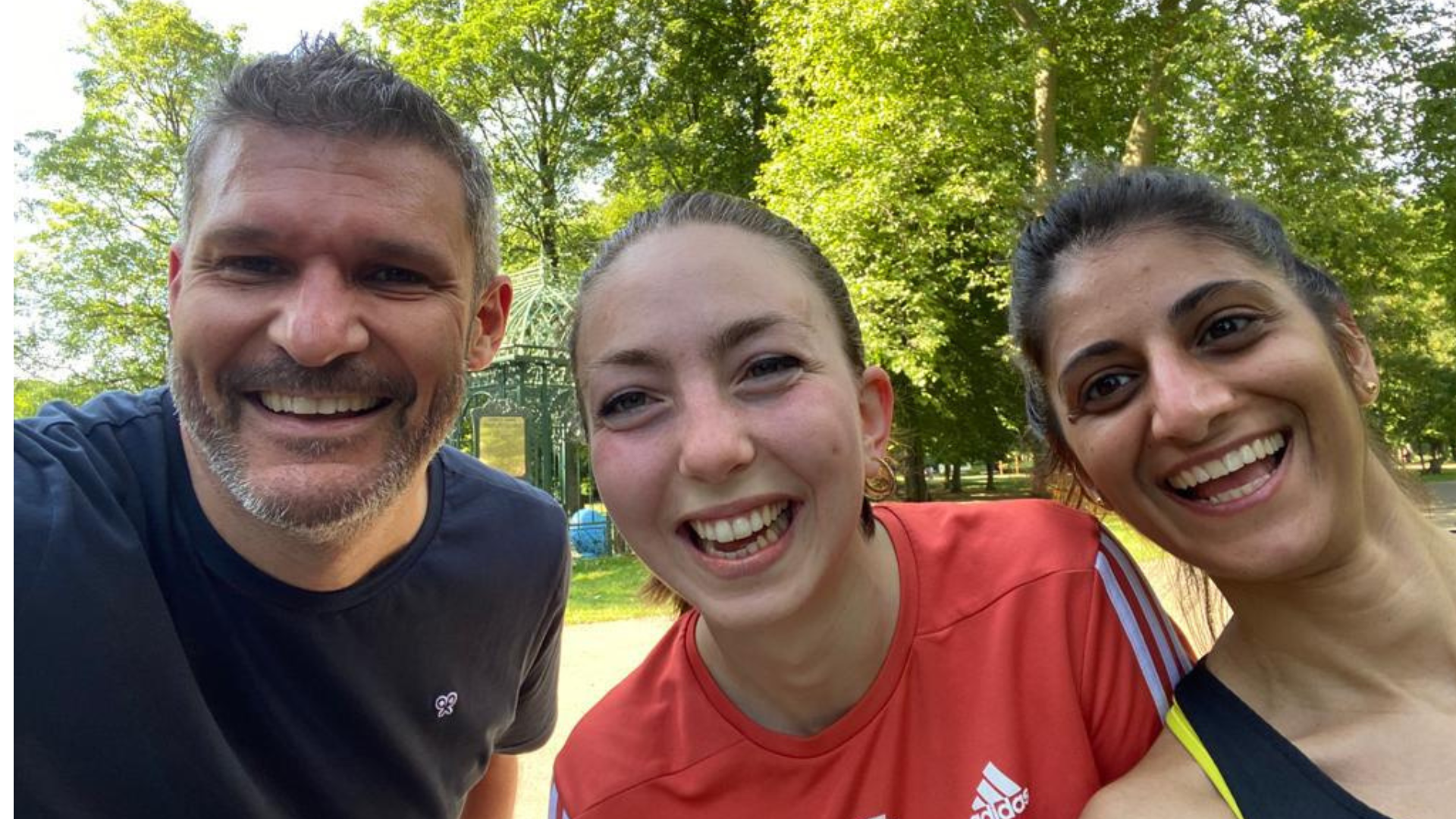
I knew that the physician who had given the lecture on guidewires was going to be at the event and coincidentally, along with my friend, we ended up going on a run together, but at this point I think that all he knew about me was that I was a junior resident at the same hospital. But that was the moment when I actually met Gabriele Gasparini.
On the last day of the conference, I remember this clearly, a few of us were going down an escalator and, even though I am very shy, I told myself I had to be brave. I turned to Gabriele and blurted out, “Can you help me find a placement for my last year of residency?”
“He looked at me, an expression of surprise on his face.
“He turned to me and said, ‘Why should I find you a place, and what exactly do you want to do?’ To which I replied, and I definitely still feel quite embarrassed about this, ‘I want to do what you do!’
“He laughed and asked me what I thought he actually did, to which I replied, ‘CTO and complex procedures.’
“Back in Milan, we started working a lot together, not yet in the cath lab, but I often helped him prepare his slides for conferences. That’s when I think he realized that I was actually quite knowledgeable, even though I had no experience.
Into the lab
“During my 3rd year of residency my cath lab rotation started and it was amazing. Gabriele was really supportive. I found that really important because my colleagues had all been working together before starting the residency.
“Initially I was actually terrible in the lab. I would have put my name up for the Worst Resident Ever award. I spent the first 3 months of the rotation just doing pre-surgical cases so I was only getting one case a day. That wasn’t giving me enough exposure to improve.
“Because I was only being given one case a day, I decided that I would increase the difficulty of my ‘easy’ cases. As an example, I would start all these cases by distal radial access. I set myself the goal of not getting any blood on the table at all. I wanted everything to be as clean as possible and to use the least amount of contrast as possible.

“After 3 months I was finally able to scrub into the other cases and after finishing my rotation Gabriele helped me find a place in a hospital in Spain to go to on my last year of residency. He said, “Go there and you won’t regret it.”
“He was absolutely right. I spent an incredible year there, I did a lot of cases and I learnt a lot. I was working with someone that had the same mindset and that was focused on thinking before doing and understanding the why behind everything we do. It allowed for space to question everything because I believe that if you don’t question yourself you cannot grow.

“After this, I went back to Milan and finished my residency. I decided to do my CTO and complex PCI fellowship and then they invited me back to Spain.
“For me human relationships are key. I don’t really care about money or PCI fame. Having people who encourage you to improve and lean into your curiosity makes all the difference. In my path I’ve realised that finding joy in sharing moments with others, rather than competing with each other, is has consistently given meaning to my journey.”